


















Beginning from Tuesday July 8 to Wednesday July 9, the first ever conference in Nigeria, which is exclusively dedicated to discussing and resolving safety issues pertaining to natural gas utilization will be held in Abuja, the nation’s capital.
Despite its novel status, the Gas Safety Conference (GSC), which is being organized by Fleissen Events, has already received official endorsement from the Federal Government through the National Automotive Design and Development Council (NADDC).
“The NADDC is proud to endorse this vital program, which provides an important platform to address safety in the use of gas as a key resource for sustainable energy solutions,” said NADDC in a letter dated July 2nd and signed by its director general, Oluwemimo Joseph Osanipin, a copy of which was seen by InsideBusiness.
“We recognize the critical role this conference plays in fostering dialogue, shaping expertise and advancing innovative strategies for safer and more responsible energy practices. It is a privilege to join this distinguished initiative that aligns closely with our commitment to promoting cleaner mobility and ensuring environmental safety,” the letter further read.
“Our participation reaffirms our dedication to supporting initiatives that contribute to a cleaner, greener and safer environment,” it concluded.
Apart from NADDC, the Nigerian Midstream and Downstream Petroleum Regulatory Authority (NMDPRA) has also been officially confirmed by Fleissen Events as strategic partners and major sponsors of the Gas Safety Conference. In addition, many high profile Federal Government officials have confirmed their attendance of the conference and full participation in activities relevant to their respective statutory mandates. These include the minister of information and national orientation, Mohammed Idris; the minister of state for petroleum resources (gas), Ekperikpe Ekpo; and Engr. Farouk Ahmed, the chief executive of NMDPRA.
Others are the senate committee chairman on gas, Sen. Jarigbe Agom Jarigbe; the commissioner for insurance/CEO, National Insurance Commission (NAICOM), Olusegun Omosehin; and the director general of National Emergency Management Agency (NEMA), Zubaida Umar.
Joining the above list of top level government officials at the conference will be many more delegates drawn from various government agencies, such as Adetunji Adeniran, registrar, Council of Registered Builders of Nigeria (CORBON); Sarki Abdulrahman, a chief superintendent of fire from the Federal Fire Service; Aderonke Bamidele, head of motor vehicle administration, FCT command, Federal Road Safety Corps; Samuel Odi, principal standards engineer, Standards Organization of Nigeria (SON); and Michael Oluwagbemi, programme director, Presidential Compressed Natural Gas Initiative (PCNGi), among others.
Aside government representatives, interest from the private sector in participating in the conference has also been remarkable, with many extending sponsorship support, such as AYM Shafa Energy, Tetracore, and Roberts House Nigeria Limited. The chairman of GSC, Osten Olorunsola, will also grace the occasion.
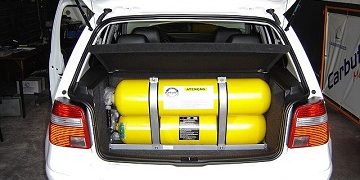
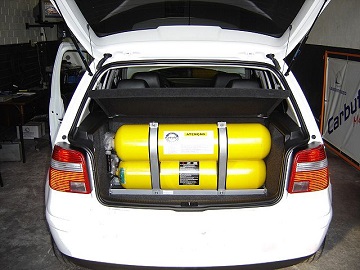
The strong and widespread interest shown in this maiden edition of the Gas Safety Conference may not be unconnected with recent accidents involving gas-powered machines in different parts of the country, some of which have been grave or even fatal. In March this year, a CNG-powered truck lost control, causing multiple-vehicle collisions and explosion Near Karu Bridge, along Abuja-Keffi Expressway, burning several vehicles, claiming many lives, injuring many more and causing widespread damage. Several other incidents involving CNG-powered vehicles, including a car explosion in Edo State, have also been previously reported.
Dr. Sunday Kanshio, who is the managing partner of Fleissen & Company, said that “gas handling carries significant risks due to its volatile nature, since gas leaks or explosions can cause catastrophic damage as highlighted by recent incidents in the country.”
He however noted that “the forthcoming Gas Safety Conference will focus on developing and enforcing safety standards, infrastructure, as well as training across the entire gas value chain.”
According to government figures, over 100,000 petrol-powered vehicles have been converted into CNG-powered modes in the past one year, following a renewed push in the country for mainstreaming the use of alternative fuels that are cleaner and cheaper than diesel and premium motor spirit (PMS), which is popularly known as petrol in Nigeria.
As a result of this, the adoption of CNG as an alternative fuel is accelerating in the country, driven by government programmes and increased public sensitization about the benefits of the fuel. Leveraging unprecedented federal government support and new partnerships with diverse stakeholders, the Presidential CNG Initiative (PCNGi) said it aims to establish 500 engine conversion centers by the end of 2025 and facilitate the presence of at least one million CNG-powered vehicles on Nigerian roads by the year 2027.
In order to make this happen, the government is offering incentives such as subsidized conversion kits and credit schemes to encourage CNG adoption in the nation’s automobile industry. In addition, a Commercial Vehicle Conversion Incentive Program (CV-CIP) is providing free conversion for union-registered vehicles in major Nigerian cities where the program is activated. Efforts are also underway to expand the network of CNG refueling stations across the country.
CNG protagonists say that the fuel is generally more affordable than petrol, offering significant savings for both commercial and private vehicle owners. They also describe it as a cleaner-burning fuel, which makes possible the reduction of harmful emissions and the achievement of better air quality.
“Promoting CNG will help Nigeria to diversify its energy sources and reduce its dependence on imported fuels,” says PCNGi data, a market situation which is also capable of saving the country from enormous revenue leakages and foreign exchange losses.
However, despite these associated beneficial claims, Dr. Kanshio insists that “the adoption of gas has brought with it increasing safety risks, regulatory demands and infrastructure challenges, which must be properly managed.”