


















By Prof. Leonard Karshima Shilgba
History has a way of honoring great men. But sometimes, history remembers them better than their own people remember their home.
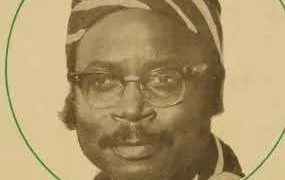
In Benue State, one name stands tall across generations: Aper Aku. As the first elected civilian governor of Benue State from 1979 to 1983, he did not merely occupy an office; he defined what visionary leadership could look like. Factories rose across the state under his watch. Institutions were founded. Industries were planted. He built with courage and imagination at a time when many leaders were content merely to preside.
The story of modern Benue’s economic awakening cannot be told without mentioning his name.
From the establishment of Benue Investment and Property Company Limited to the creation of industrial landmarks such as Benue Breweries Limited and Taraku Mills, the Aper Aku Stadium, the iconic State Secretariat, and numerous tertiary and secondary schools, including technical colleges, Aper Aku demonstrated that leadership means building foundations that will outlive the builder. He believed that the “Food Basket of the Nation” must not merely grow crops but must grow industries, opportunities, and hope.
Yet there is a painful irony that must be spoken with honesty.
The ancestral community that produced this towering son of Benue — Mbaikyobo— has remained largely forgotten by successive governments.
For decades, the land that gave Benue one of its greatest leaders has waited in quiet neglect.
It was only during the administration of Gabriel Suswam (2007–2015) that electricity finally reached the Mbaikyobo community in 2011. That intervention brought light to a people who had waited far too long.
Governor Suswam also awarded a road contract to build a road from Ge through Ikyobo, handled by a local contractor, Gyado Construction Company. Sadly, that project never reached completion. Today, more than a decade later, the portion of the road that was started has deteriorated badly, leaving the community with a painful reminder of a promise that faded away.
The truth must be said gently but clearly: Mbaikyobo still suffers from basic neglect.
There is no good access road.
There is no state or federal government hospital.
There is no public secondary school built by the Benue State government.
The secondary schools serving the children of the community today are products of private sacrifice and community effort, not government provision.
This reality is difficult to reconcile with the legacy of the man whose vision helped shape modern Benue.
Today, however, hope rises again.
Under the leadership of Hyacinth Alia, many citizens sense a renewed seriousness about rebuilding Benue. His language of reform, his emphasis on production, and his determination to restore institutions remind many of the disciplined vision that once guided the state under Aper Aku.
It is in that spirit that we make this appeal.
Governor Alia, please remember Mbaikyobo.
Remember the land that raised the man who laid the economic foundations of our state.
Remember the community that gave Benue a governor whose vision still inspires our development conversation today.
Let this administration wipe away the tears of the people of Mbaikyobo by undertaking a few transformative interventions:
* Construct and properly complete the Ge–Ikyobo–Amua road, giving the community reliable access and opening it to economic activity.
* Establish a public hospital to serve the health needs of the people.
* Support education by strengthening private or community efforts or establishing government secondary schools in the area.
These are not extravagant demands. They are simple acts of justice.
Honoring Aper Aku should not only happen in speeches, memorials, or anniversary reflections. The most meaningful tribute to his legacy would be to ensure that his own ancestral community is no longer left behind.
Let the land that produced a builder also experience rebuilding.
Let the soil that gave Benue one of its greatest sons feel the touch of development.
Governor Alia has the opportunity to close a painful chapter of neglect and open a new chapter of dignity for the people of Mbaikyobo.
And if that happens, history will record that the son of the priesthood remembered the son of the pioneer.
For the people of Mbaikyobo, that day cannot come soon enough.
Prof. Leonard Karshima Shilgba, Son of Ikyobo.
© Shilgba