























By YANGE IKYAA
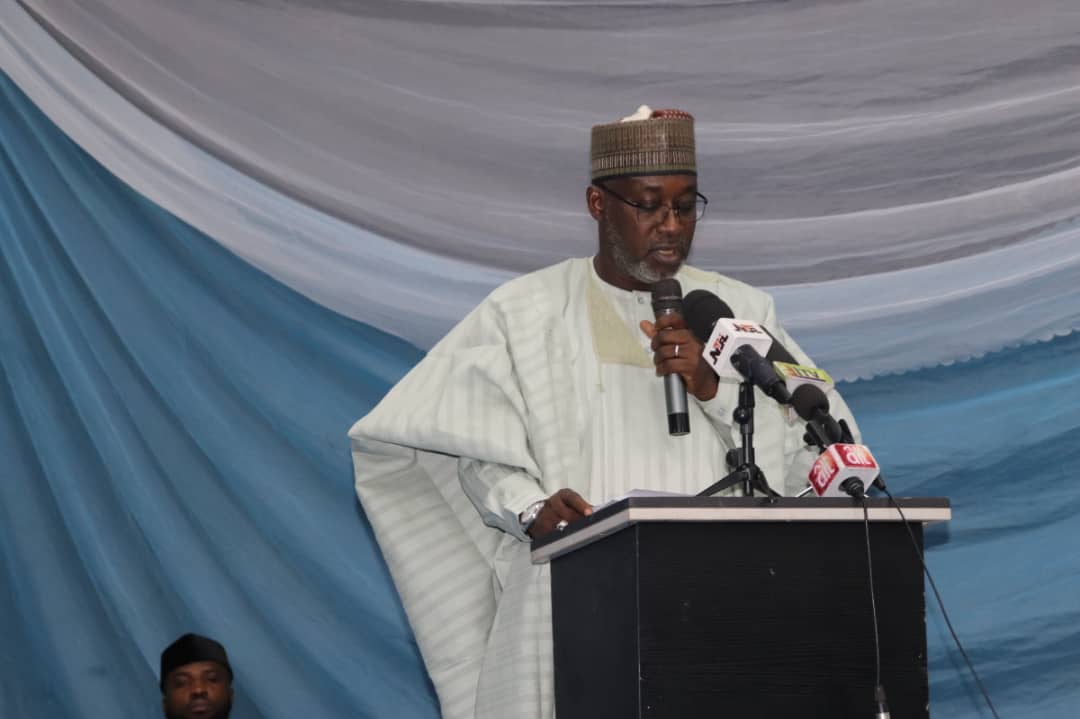
The minister of water resources, Engr. Suleiman Adamu, has stated that the Annual Flood Outlook (AFO) released each year by the ministry is an imperative tool in flood risk management for minimizing the adverse effects of flood on lives, properties, critical infrastructure and social economic well being.
The minister made this known on Thursday during the presentation of the 2022 Annual Flood Outlook (AFO) by the Nigerian Hydrological Services Agency (NIHSA) in Abuja.
According to him, Nigeria regularly experiences flood disasters, particularly during rainy season, and communities that depend on the river ecosystem and its fertile flood paths for their sustenance and social economic wellbeing, as well as urban and semi urban areas with inadequate drainage systems, are mostly affected by flood losses.
He added that AFO has aided the abatement of flood risks in the country through early warnings and forecastings, and applauded the Nigerian Hydrological Services Agency for improving on its predictive capacity through the introduction of new approaches to the 2022 AFO, which are designed into three respective scenerios of flood outlook for the months of April to June(AMJ); flood outlook for September to July (JAS); and flood outlook for the months of October to November (ON) respectively.
Engr Adamu further revealed that the general flood outlook for 2022 shows that 233 local government areas in 32 states of the federation and FCT fall within the highly probable flood risk areas, while 212 local government areas in 35 states of the federation, including the FCT, fall within the moderately probable flood risk areas. He added that the remaining 392 local government areas fall within the probable flood risk areas.
Speaking further, the minister noted that the highly probable flood risk states include Adamawa, Abia, Akwa Ibom, Anambra, Bauchi, Bayelsa, Benue, Cross River, Delta and Ebonyi. Others are, Ekiti, Edo, Gombe, Imo, Jigawa, kaduna, Kano, Kebbi, Kwara, Lagos, Nasarawa, Ogun, Ondo, Osun, Oyo, Rivers, Sokoto,Taraba,Yobe, Zamfara and the FCT.
Engr Adamu affirmed that Rivers, Bayelsa, Cross River, Delta, Edo, Lagos, Ogun and Ondo will experience coastal flooding due to tidal surge and rise in sea level.
He added that flash and urban flooding will be experienced in parts of Lagos, Kaduna, Suleja, Gombe, Yola, Markurdi, Abuja, Lafia, Asaba, Port Harcourt, Yenagoa, Ibadan, Abeokuta, Benin City, and Birni kebbi. Others include Sokoto, Lokoja, Maiduguri, Kano, Oshogbo, Ado Ekiti, Abakaliki, Awka,
Nsukka, Calabar and Owerri
According to him, efforts are in top gear by the ministry of water resources to put in place structural control measures, such as dams, canals, storm drains and other facilities to divert flood waters away from highly probable flood risk zones in the country.
He gave an assurance of strong collaboration with neighbouring countries with regards to water releases from dams within their catchments and better preraredness to avert any eventual flood incidents.
Also speaking at the public presentation of the 2022 AFO, the director general (DG) of the Nigerian Hydrological Services Agency (NIHSA), Engineer Clement Nze, stated that people will be better informed through the 2022 AFO document.
The highpoint of the occasion was the unveiling of the AFO document.