






















The National Information Technology Development Agency (NITDA) has unveiled a National Digital Literacy Dashboard, revealing 2,769,512 digital literacy training achievements recorded across Nigeria over the last three years.
This figure represents 5.54 per cent of the federal government’s target of reaching 50 million beneficiaries by 2027.
The was made known at the 2026 National Digital Literacy Workshop in Abuja, where the dashboard was launched to improve coordination, track progress and identify gaps in the country’s digital skill development efforts.
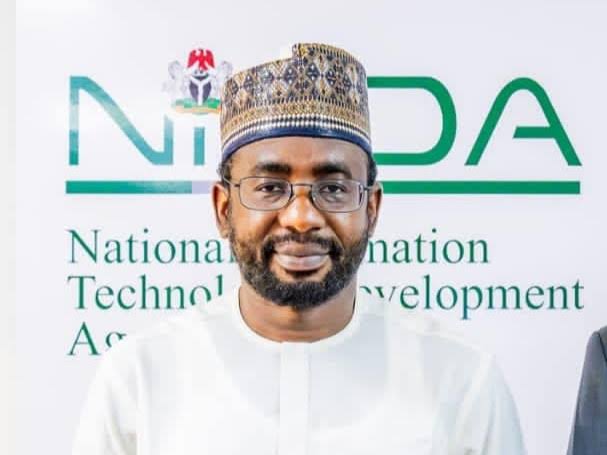
Speaking at the workshop, NITDA Director-General, Kashifu Inuwa, said digital literacy had become fundamental to economic participation as technology and artificial intelligence continued to transform businesses, education, communication and public service delivery.
“Our ambition is not to turn every Nigerian into an IT professional. Our ambition is to make every Nigerian digitally capable,” he said.
Inuwa explained that digital skills should enable Nigerians to improve their existing occupations, citing how traders could manage business records and receive electronic payments, farmers could access weather forecasts and market information, and teachers could use technology to improve classroom learning.
According to the dashboard, young people below 35 account for 2,092,697 training achievements, while informal-sector workers represent 1,609,183. Women account for 32.9 per cent of reported beneficiaries, while 65,767 beneficiaries are from rural communities and 17,156 are persons with disabilities.
The platform brings together reports from 252 organisations implementing digital literacy interventions across Nigeria’s 36 states, the Federal Capital Territory and all 774 local government areas.
The figures under review highlight the reach of ongoing interventions by NITDA, but also point to the need for greater inclusion of women, rural residents and persons with disabilities.
Companies constitute the largest category of reporting organisations, with 151 of the 252 participants. Government institutions account for 43 organisations, while non-governmental organisations account for 34.
Cisco recorded the highest number of training achievements at 1,073,604, followed by NITDA with 960,424 and Meta Platforms Inc. with 333,816.
Inuwa said the dashboard would help prevent duplication of interventions in some communities, while other areas remained underserved. He described NITDA’s role as that of an ecosystem coordinator, bringing together government agencies, private companies, educational institutions and civil society organisations.
However, he cautioned that reported training achievements should not automatically be interpreted as the number of unique Nigerians who had attained a defined level of digital proficiency.
Inuwa added that the agency would increasingly focus on assessing participants’ competencies and determining whether they could apply their skills to improve their businesses, employment prospects and everyday lives.
The initiative is anchored on the National Digital Literacy Framework established in 2023, which covers six areas: device and software operations, information and data literacy, communication and collaboration, digital content creation, digital safety and problem-solving.
NITDA launched its Digital Literacy for All (DL4ALL) programme in 2024 to translate the framework into practical training across formal education, workforce development and the informal sector.
The framework targets 70 per cent digital literacy by 2027 and 95 per cent by 2030, supporting the Federal Government’s broader ambition to build a $1 trillion economy by 2030.
Stakeholders at the workshop urged state governments, technology companies, educational institutions and development partners to register their interventions and provide credible data to strengthen accountability.
With less than six per cent of the 50 million target currently represented in reported training achievements, the dashboard is expected to provide a basis for measuring progress and identifying where additional investment is needed to expand digital skills nationwide.